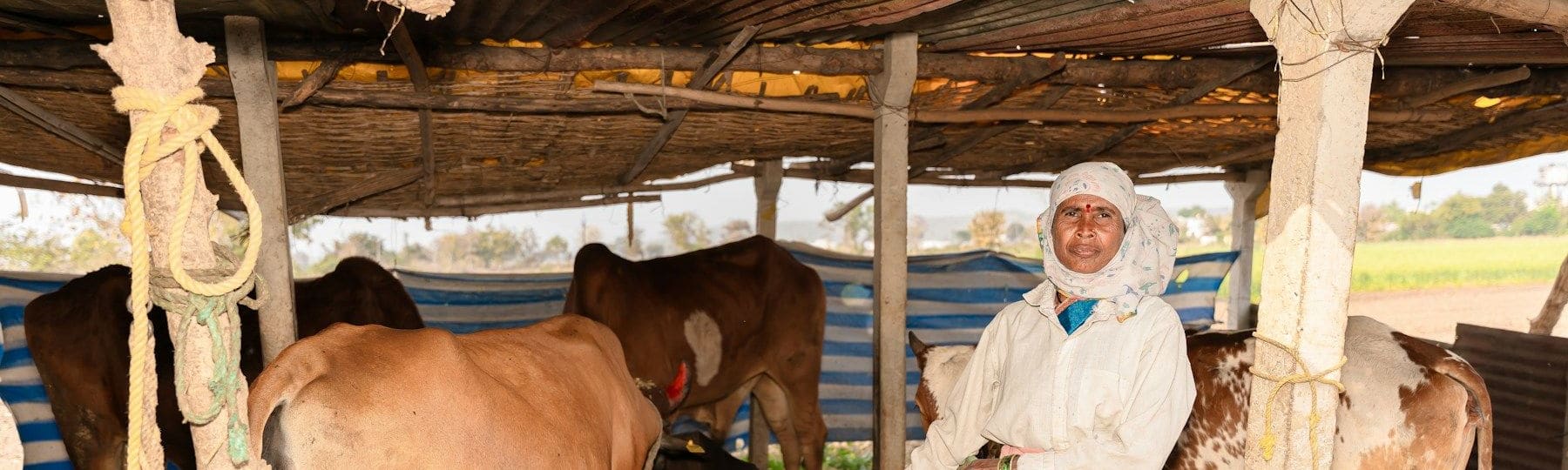
Dairy, Goat and Poultry Farming: Loans and Subsidies a Farm Family Can Ask For
A cow or buffalo, a few goats, or a small poultry shed can bring in money every month, not only at harvest. But animals need money first, for the animals themselves, for feed and for a shed. This guide lists the government help a farm family can ask about, who each scheme is for, and what we could not confirm. It uses the Government of India's own statements.
Some of these schemes are meant for small families. Others are meant for people who want to build a business. Pick the one that matches your size, and do not borrow more than you can repay.
Step 1: Know your size
| Your plan | The scheme to ask about first |
|---|---|
| Feed and running costs for a few animals | Kisan Credit Card (KCC) |
| A bigger poultry, goat, sheep or pig farm | National Livestock Mission subsidy (NLM-EDP) |
| A dairy or meat processing unit, a feed plant or a breeding farm | Animal Husbandry Infrastructure Development Fund (AHIDF) |
Option 1: Kisan Credit Card for animals
Many people think KCC is only for crops. The government says that since 2019, the KCC scheme also covers the working capital needs of animal husbandry, dairying and fisheries. Working capital means the day-to-day running money, such as feed and fodder.
- The interest rate. KCC loans carry 7% a year, and farmers who repay on time get an extra 3% incentive, which brings the effective rate to about 4%.
- The limit that gets the interest benefit. For loans taken only for animal husbandry or fisheries, the government's 2025-26 statement says the interest benefit applies up to ₹2 lakh.
- No collateral. The limit for collateral-free short-term farm loans, including loans for allied activities, was raised to ₹2 lakh per borrower, so you may not need to pledge land for a loan of that size.
An illustration, with made-up numbers: if a family draws ₹1,00,000 for a year for feed and repays on time, the interest is about ₹7,000 at 7% and about ₹4,000 at the effective 4%. Ask the bank what rate your loan really carries.
For the steps at the bank, our guide Kisan Credit Card step by step covers the papers and the questions to ask. If you hold only an animal loan, tell the bank so, since the limits for crops and animals are different.
Option 2: Subsidy for poultry, goat, sheep and pig farms
The National Livestock Mission, Entrepreneurship Development Programme (NLM-EDP) gives a 50% capital subsidy for rural poultry, sheep, goat, pig, camel, horse and donkey farms. It also covers fodder units such as hay, silage and fodder blocks. The ceiling depends on the component and ranges from ₹3 lakh to ₹50 lakh. For rural poultry breed development ventures, the subsidy is up to ₹25 lakh.
Who can apply: individuals, Farmer Producer Organisations (FPOs), Self-Help Groups (SHGs), Joint Liability Groups, farmer cooperative organisations and Section 8 companies.
How it works: The scheme is digital from start to finish, and State Governments act as the implementing agencies that process and verify proposals. The government says 3,843 projects had been approved as of December 2025.
An illustration, with made-up numbers: if an approved project cost ₹10 lakh and fell within the ceiling, a 50% subsidy would be ₹5 lakh. Your actual subsidy depends on the component, the unit size, the ceiling and approval.
Important: A subsidy is not the whole loan. You still need your own share and usually a bank loan. Ask your state animal husbandry department how to apply and what the project report must contain.
Option 3: AHIDF for processing and infrastructure
The Animal Husbandry Infrastructure Development Fund (AHIDF) is for larger projects: dairy and meat processing units, animal feed plants, veterinary vaccine and drug units, and breed improvement farms for cattle, buffalo, sheep, goat, pig and poultry.
- Interest subvention. The government gives 3% interest subvention for 8 years, including a 2-year moratorium.
- The loan. Term loans of up to 90% of the project cost from scheduled banks, NABARD, NCDC, NDDB or SIDBI, with no ceiling on the loan amount.
- Credit guarantee. A 25% credit guarantee on the term loan for projects in the MSME category.
- Who can apply: individual entrepreneurs, private companies, FPOs, MSMEs, Section 8 companies and dairy cooperatives.
For most small farm families this is too large. It matters if you plan to start a processing unit, or if your FPO or dairy cooperative wants to build one.
Before you borrow
- Work out the monthly cost and the monthly income. Count feed, medicine, labour and the loan repayment. Use our loan EMI calculator for the repayment.
- Start small. Buy animals in stages, not all at once.
- Check the market first. Where will you sell the milk, eggs or animals, and at what price?
- Ask your bank for the interest rate, all charges and the due date in writing.
- Do not pay an agent to arrange a subsidy or a loan. Government schemes do not need one.
If you already owe a moneylender, read how a farm family can move to cheaper bank credit first.
What we could not confirm
- Whether AHIDF continues after 2025-26. The most recent government statement we found lists money for the scheme only up to 2025-26. Ask your bank or the animal husbandry department whether it is open for new projects.
- The KCC limit for animal husbandry for 2026-27. The 2025-26 statement gives ₹2 lakh for the interest benefit on animal-only loans. Some government material mentions a higher limit for fisheries and allied activities, so ask your bank which limit applies today.
- The exact subsidy ceiling for your animal and unit size. The ceiling depends on the component. Check the current NLM-EDP guidelines with your state animal husbandry department.
- A central subsidy for starting a small dairy farm. We did not find a current one in the statements we read. Some states run their own dairy schemes, so ask your state department.
- Insurance for animals. We did not research livestock insurance for this guide.
- How long a bank or the state takes to decide. We found no fixed number of days.
Protect yourself from scams
- Never pay a fee to "approve" a subsidy or a loan.
- Never share your OTP, Aadhaar number or bank PIN with someone who calls about "dairy subsidy".
- Apply only through your bank, your state animal husbandry department or the official online portal they point you to.
- Be careful of anyone who sells animals or sheds and promises a guaranteed subsidy.
Where to read next
- Kisan Credit Card step by step
- Leaving the moneylender: how a farm family can move to cheaper bank credit
- Savings, pension and insurance for farm families
- All central government schemes
This is general information, not financial advice. Schemes, limits and subsidies change and differ by state. Confirm the current terms with your bank and your state animal husbandry department before you borrow.
Found this useful? Share it with someone who needs it.